Inside Stories
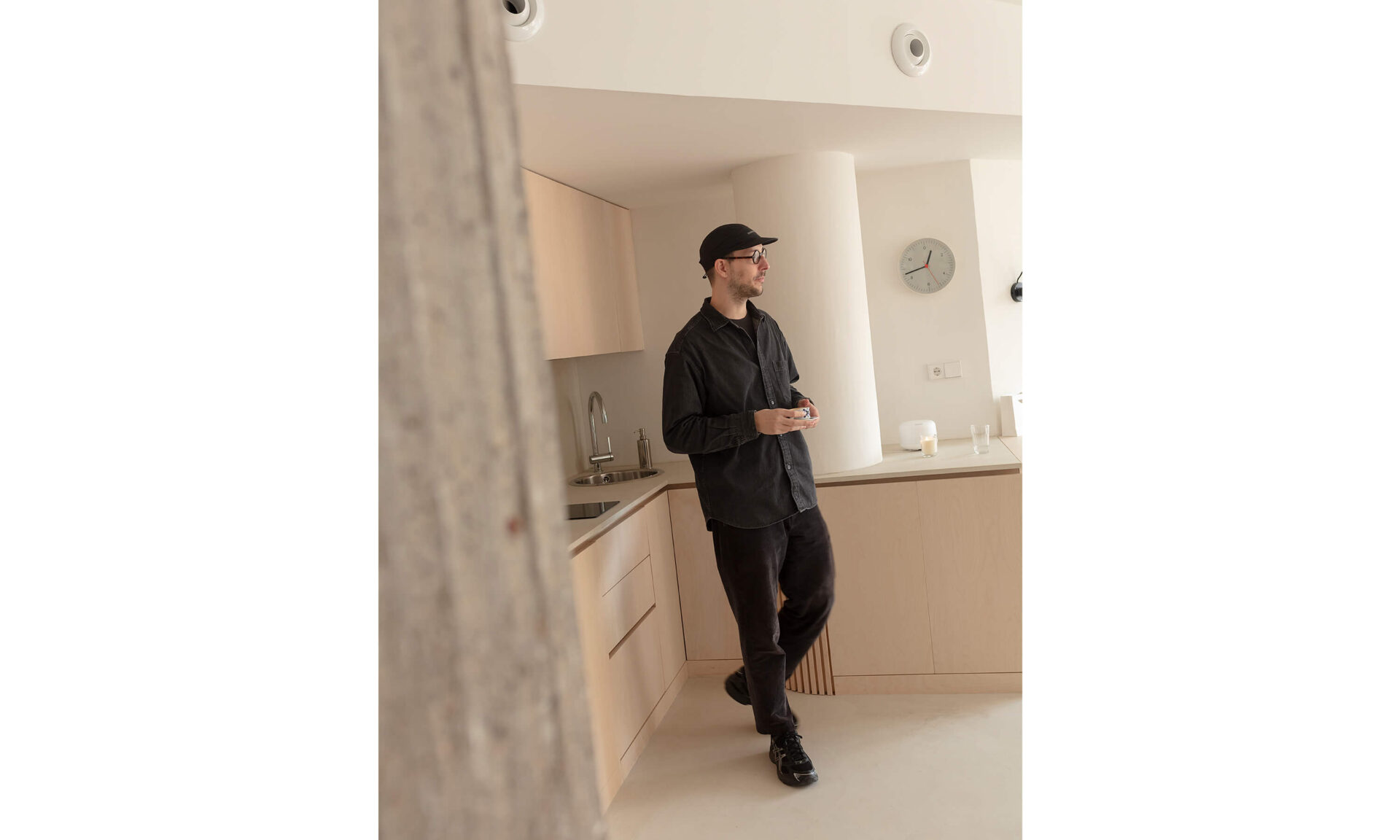
We introduce Albert Romagosa in his creative space, an environment where calm and inspiration coexist and bring his creative universe to life.
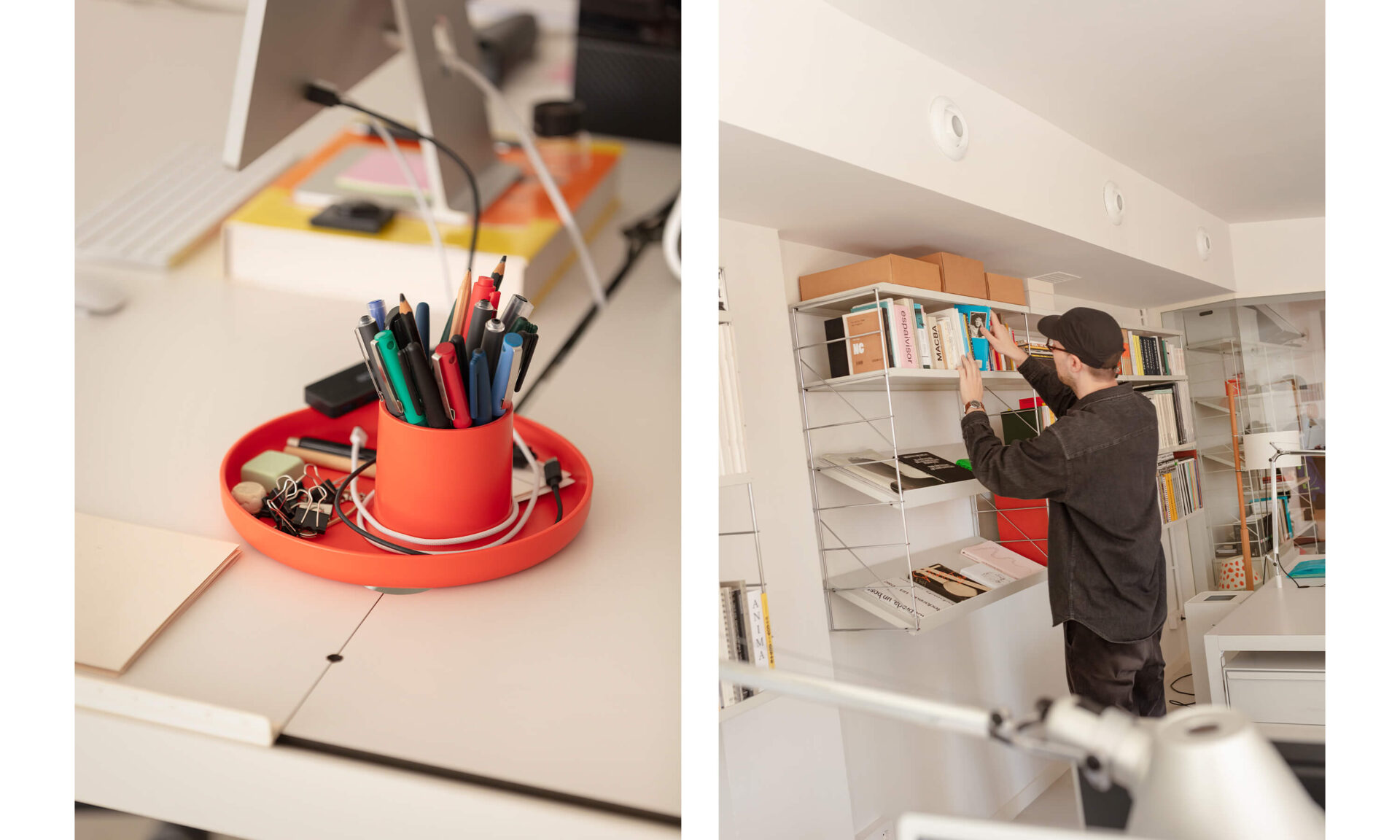
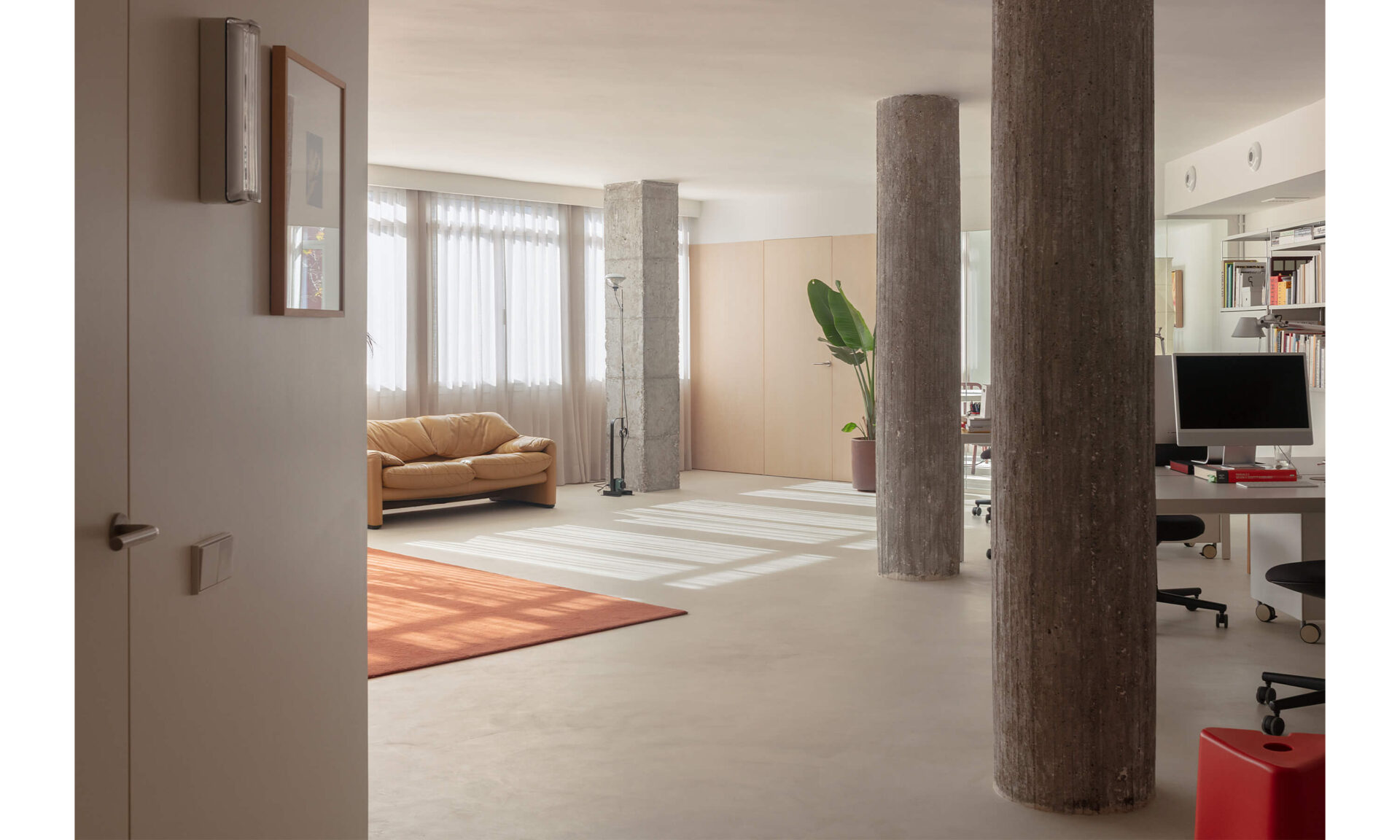
Albert Romagosa’s studio, located in the heart of Barcelona’s Eixample district, is a workspace where design and thought coexist with a natural ease that radiates peace. Bright and airy, the studio offers a sense of calm thanks to an architecture that balances transparency and opacity, allowing filtered light to define the spaces. This serene atmosphere is achieved not only through the space itself but also through a careful selection of furniture and objects that interact harmoniously: a design that is discreet—almost invisible—and that focuses on the essentials.
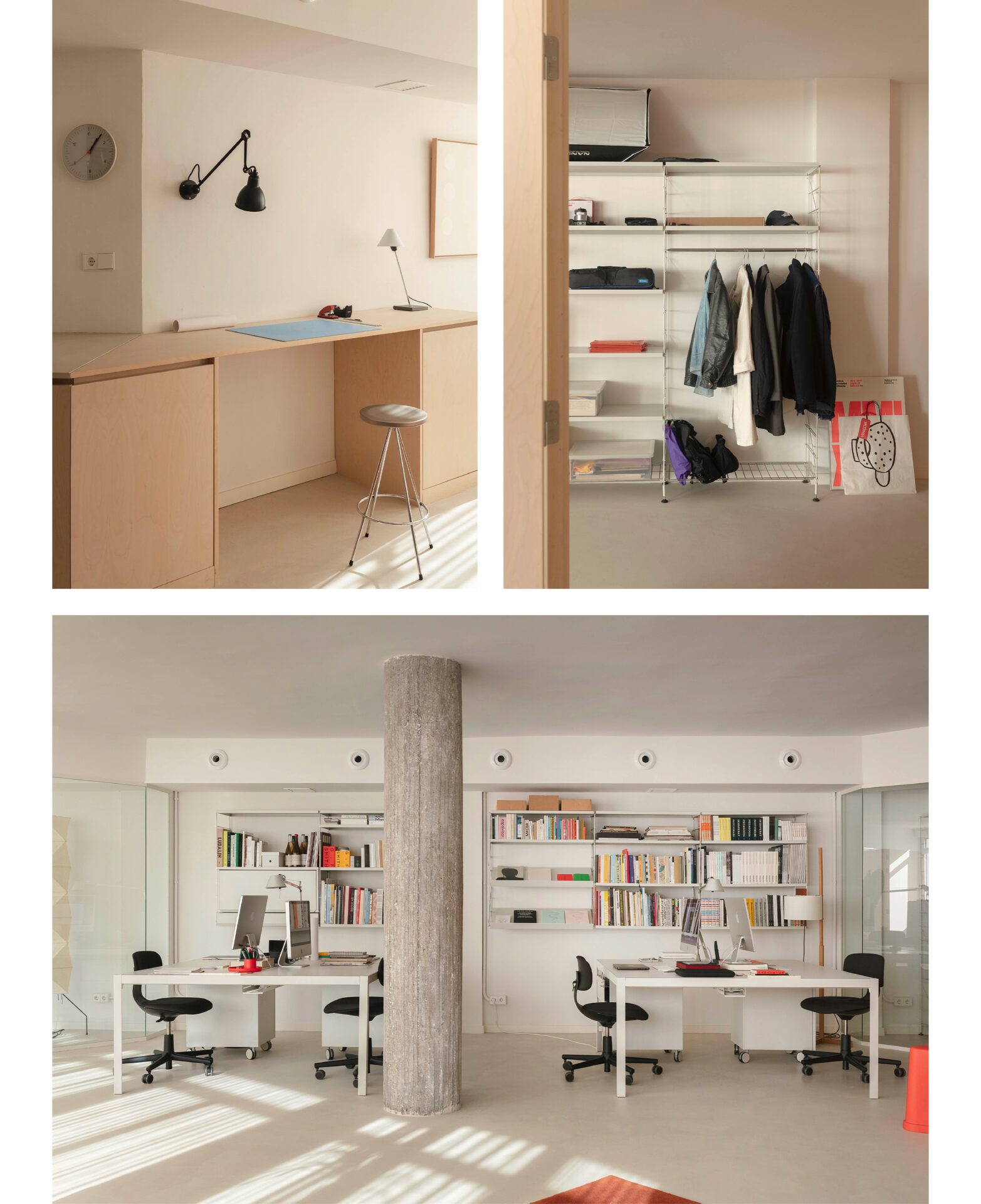
It is here that Albert develops his projects, approaching each commission with an analytical eye that seeks the perfect synthesis. For him, design is a tool for reflection and resolution, capable of avoiding repetitive solutions and endowing each proposal with its own personality.
The result is a space that goes beyond what we would typically consider a simple studio: a creative laboratory where order, clarity, and thought take shape. Even the scent is one of the elements that contribute to the sense of well-being that welcomes us as we enter the studio. We invite you to step inside this place where design is understood as an attitude, a process, and a way of seeing.
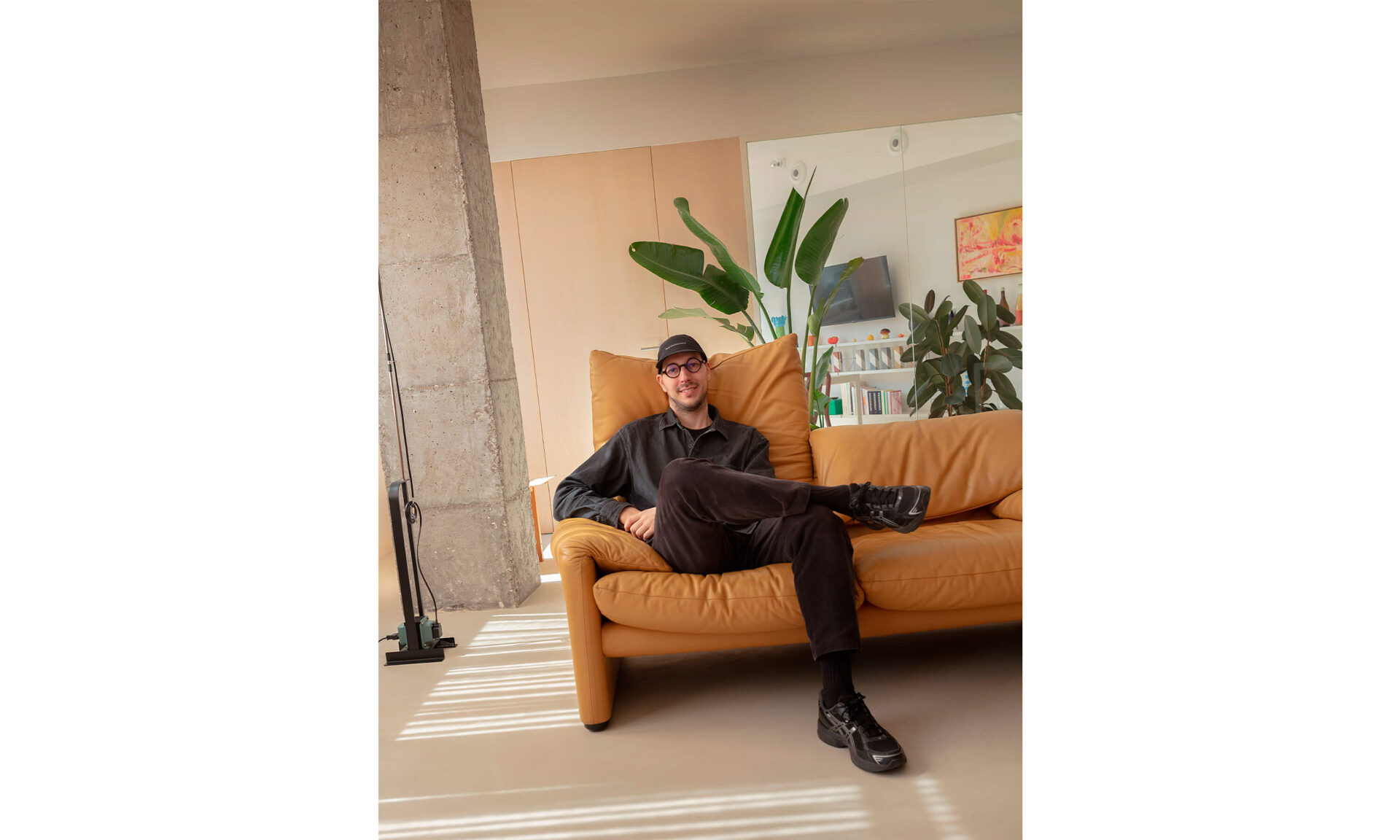
Which artistic fields draw you in most?
Art, particularly the language of visual artists. Architecture fascinates me. Music is indispensable — there’s always something playing at the studio. Over the past three years, cinema has become almost obsessive for me. And cooking is my hobby: the kitchen is where love and creativity meet.
How important are non-graphic references at the beginning of a project?
Context is always my starting point. It establishes the framework in which a project must exist and negotiate meaning. Sometimes you work against it; sometimes you follow it. Publications are slightly different: I begin with the object — its scale, weight, materials, binding. That creates its own context, and the object itself starts signalling what belongs and what doesn’t. Whatever the commission, full immersion is essential.
When you open a book, magazine or catalogue, what do you notice first?
Its size, its weight, and how it opens. I’m fascinated by the physicality of books and how they relate to the anatomy of the hand.
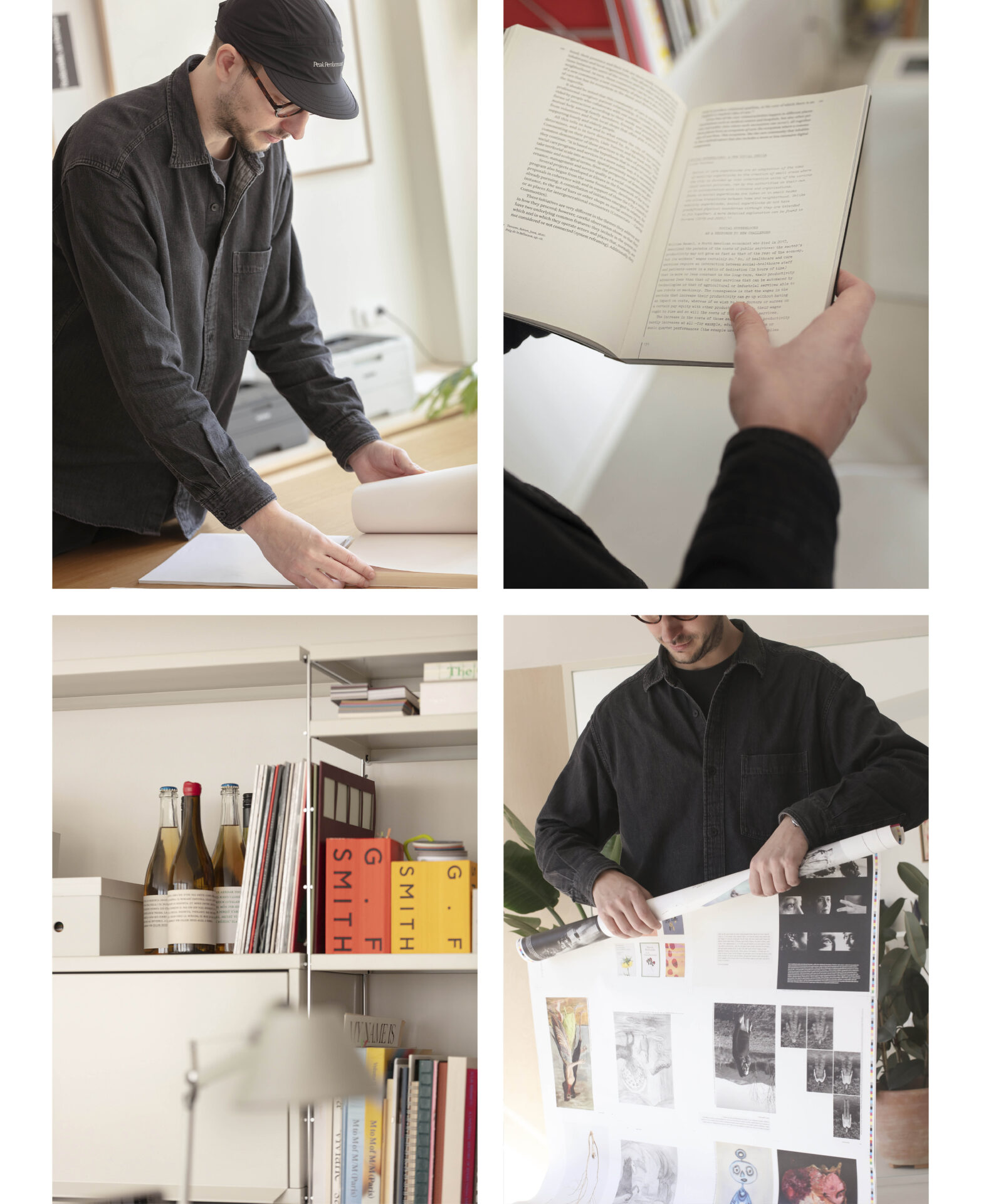
Why editorial design?
Because publications inhabit space and time — they have volume and sequence. They allow designers to leave something of themselves behind.
Nature and city: how do they shape your work?
I spend less time in nature than I would like, though I feel its pull. I want to believe there’s something earthy in my work, yet I’m undeniably a city person.
The studio is fairly new. How did you find it, and how did you approach its design?
Before becoming a studio, the space served as a dental prosthetics laboratory: a clinical maze of small rooms, ovens and desks. Stripping it back to its structural pillars exposed a very different potential — an uninterrupted volume that invited openness, clarity and air. The renovation unfolded as a three-way collaboration. My father oversaw the technical dimension, while architect Albert Brito, from Ofici: arquitectura, shaped the material and spatial language. I occupied the space between both, negotiating intention, detail and rhythm. Yet the project’s true transformation was not only architectural. My father and I had never worked together, and our relationship had long been marked by distance and a kind of quiet misunderstanding. The studio provided neutral territory — a place where tasks and decisions became a new form of dialogue. By the time the work concluded, we had not only built a space, but softened a relationship. In that sense, the studio’s architecture carries an invisible layer: that of reconciliation.
Are you a fetishist about objects?
Not exactly. But if I come across a book I’ve been hunting for, I won’t resist it. I also have a weakness for candles and lamps.
A final, unconventional question: what comes to mind when you think of Fahrenheit 451?
Not the novel, but Truffaut’s film. The opening sequence is extraordinary.

Five brief questions
Boredom, to you?
An unresolved challenge.
Favourite word?
A question I tend to ask others.
What can’t you stand?
Demands without reasoning.
A moment of peace?
Mushroom hunting.
Sea or mountains?
Mountains! Though I always welcome whatever the sea offers.
Credits
Editing: Claudia Fernández
Photography: Meritxell Arjalaguer
Translation: Claudia Fernández
Space: Studio Albert Romagosa

